
Be a Swimmer, Not a Quitter
When I was a child, I loved to swim. And it didn’t take long before others noticed I was good at it. I advanced through the lesson levels rather quickly and the coach of my hometown’s swim team approached my mother to ask if I’d like to join the team. They even made an age exception by allowing me to join at just 6 years old.
And it didn’t take long before I realized I hated being on the swim team.
Not only did I feel out of place because everyone was several years older than me, but swimming pool laps as a first-grader after a long day of school is the furthest thing from fun that I can think of (even now as a 32-year-old, the mere thought of it is nauseating).
The difference is that swim lessons are about safety; the goal is to learn the skill of swimming in order to survive in a body of water. On a swim team, the goal is to pursue perfection of a skill through constant improvement
During my first swim meet competition, my parents literally had to peel my hands off the door of the van in order to get me inside. If I remember correctly, I finally agreed to participate after they bribed me with the promise a new Barbie doll after the meet.
I still have vivid memories of that meet. It was loud, it was crowded, and there were several sections of pools roped off into lanes. My parents weren’t allowed on the pool deck itself, so they watched from a room above. I remember feeling scared and overwhelmed, not knowing where to go or what to do. No one had even explained that, in order to stop the timer to record your swim time, you had to touch the side of the pool. I think the whole thing was just very frightening because no one had really explained what to expect and I was so young at the time.
I begged to quit. I sobbed. I pleaded. I told my mom I didn’t want to go because I didn’t enjoy it. I had trouble sleeping because I dreaded having to go to swim practice the following day. A few times, I even pretended to not feel well so my coaches would let me sit on the bleachers and watch instead of doing laps in the pool. Looking back, this is probably the first time I remember feeling what I’d describe as anxiety.
But no matter how much I cried and begged, I wasn’t allowed to quit.
I was told that, because I had agreed to join the team, I had made a commitment.
And because I had committed, I had to follow through.
It didn’t matter that I hated it. It also didn’t matter that I was only 6.
So at 6 years old, I had sealed my fate until the end of the swim season. And to a 6-year-old, a year feels like a lifetime.
At that age, I didn’t have the language for what I was really feeling. All I knew was that I had tried something new and ended up not liking it. And although following through on your responsibilities and commitments is a crucial life lesson, I’m not sure if a 6-year-old has the maturity to really grasp this concept. I’d even confidently assume that most adults wouldn’t force themselves to participate in a hobby multiple times a week for an entire year if they hated it — and if they did, it would probably take a toll on their mental health.
Looking back, I think what I really felt was that my voice didn’t matter.
At six, I wasn’t trying to avoid responsibility. I wasn’t a defiant child. I wasn’t lazy.
To a little girl who just wanted to play with her friends, swimming laps felt like torture.
I had tried something and disliked it. I could barely tie my own shoes and I was losing sleep over a sport that didn’t even matter.
And I was trying to communicate discomfort. Fear. Misery. Dread.
I felt like I had lost a piece of control over my own body.
A body and a little nervous system that was saying this makes me uncomfortable and it doesn’t feel enjoyable for me. And I was begging the big people in charge to take my discomfort seriously. I desperately wanted the adults around me to take the discomfort away because, at the end of the day, it was their choice — not mine.
I think what I learned was so much bigger than swimming.
It was the first time I learned that finishing something — even if it made me miserable — was more important than how I felt. I learned that how others perceived me was more important than my own wellbeing. I learned that commitment was a virtue, even if it came at the cost of my own experience and joy.
I learned that pushing through your feelings of discomfort was a sign of character.
Of course, my parents’ intentions weren’t to teach me that my feelings were irrelevant. They were trying to raise someone strong, capable, responsible, reliable, well-rounded, and loyal.
But for a sensitive 6-year-old, that lesson landed differently.
It taught me to distrust the adults around me. It taught me that I couldn’t rely on others to take me seriously when I was uncomfortable.
It taught me to be very careful and selective about the things I pursue out of fear that I won’t like something — because everything felt a little too permanent.
It taught me that quitting was a moral failure. That discomfort was something to override. That perseverance mattered more than my happiness and wellbeing. Sure, I was good at swimming — but I didn’t like it. It wasn’t who I was. It was never what I was meant to be. And that should have been a good enough reason to stop.
I also think there was a missed opportunity to teach me the difference between a true consequence (something that may cause harm or hardship to oneself or to others) and a perceived one.
As a child, I also hated getting needles. I would also beg, cry, and plead to not have to get them. Although it may have seemed traumatic at the time, that trauma didn’t follow me past childhood — because I understood that the purpose of vaccination is to prevent illness; getting a serious illness as a result of skipping childhood vaccination is a true consequence. And it is perfectly acceptable — even encouraged — to override temporary feelings of discomfort when the end result provides personal safety, health, and wellbeing.
Would it have hurt my coach’s feelings if I had quit? Maybe — though I doubt it.
Would it have caused anyone harm or hardship? No. In fact, it caused me more harm by not quitting.
By not pursuing it, did I throw away my chance of becoming an Olympic swimmer? Maybe. But I hated it anyway — so who cares?
Quitting the swim team wouldn’t have resulted in true consequence — it was a perceived one.
And I think these lessons followed me into adulthood.
It showed up in how long I would tolerate things that were draining me. How often I ignored my own limits. How I disregarded the way I felt in favour of perseverance. How easily I told myself that doing things I hated was just a part of being a committed person. How self-punishment would make me a better person. The idea of quitting being something to be embarrassed about or ashamed of.
I had been tricked into believing that misery meant character.
Becoming Type C has forced me to question those early lessons.
Only this time, I quit because I didn’t have a choice — my body just couldn’t take it anymore.
But what if quitting isn’t always weakness?
What if stopping is sometimes a form of wisdom?
What if listening to how we feel is also a form of integrity?
At six, I didn’t need a lesson in grit.
I just needed empathy and to feel heard.
I needed the bigger people in my life to tell me that it’s okay to quit sometimes — especially when you’re just a kid — because what truly matters is that you tried.
I needed to learn that my discomfort mattered. That my feelings mattered. That my likes and dislikes mattered.
That I was allowed to try things and not just fail at them — but have permission to quit if something didn’t suit me.
And to have permission to try something else, instead.
And I needed to be given space for preferences, limits, boundaries, and some autonomy — even if it looked irrelevant (like swimming) from the outside.
Now, as an adult living with chronic illness, I’m teaching my six-year-old self the truth:
A hobby is never a moral obligation.
The purpose of a hobby is enjoyment — not commitment.
But what’s most important is being committed to yourself.
Follow through on what’s right for you — even if that means walking away from what isn’t. Actually, especially if that means walking away from what isn’t. Because that’s integrity.
You can have character and still change your mind.
You can be reliable and still be honest.
You can quit something and still be a good person.
Maybe real strength isn’t in never quitting.
Maybe real strength is knowing when staying costs you too much and walking away because you’re not willing to pay the price.
And maybe real strength is quitting the thing you dislike in order to make room for the things you love.
Because how will we ever learn what we do love in this life if we’re wasting what precious time we have on things we dislike and that don’t actually matter?
Throwing yourself a life raft when you’re drowning isn’t quitting.
Quitting something that isn’t right for you isn’t a moral failure — it’s just staying in the correct lane.
This is your life and it’s your lane.
I don’t know about you, but I’m taking my six-year-old self by the little hand and getting the hell out of the pool.
Embracing My Boredom
For most of my life, boredom felt like a problem to erase.
In my mind, boredom meant you weren’t doing enough. And if you weren’t doing enough, that meant you were lazy. And if you were lazy, that meant you were a bad person.
If I was bored, I should be doing more. Learning something. Fixing something. Changing something. Improving something. Getting as close to perfect as I could get. Being productive. Filling the space with busyness.
Boredom meant wasted time — and wasted time felt like a moral failure.
Then chronic illness slowed my life down in ways I didn’t choose.
Suddenly, there were long stretches of quiet. Empty, uncomfortable hours. Days spent with my own company and my own thoughts. Schedules that couldn’t (and didn’t need to) be filled. Time that had to be spent actually feeling.
Suddenly, I had to get to know myself.
At first, that kind of space felt unbearable. It felt empty, uneasy, and vulnerable. Not because there was nothing to do — but because there was nothing to prove.
Since becoming ill, I have learned that embracing boredom is actually one of the most radical things for chronic achievers to sit with.
Although boredom can be extremely uncomfortable to us, I have found that the key to our survival is to reframe our perception of boredom as healing and meaningful — not lazy or empty.
For chronic achievers, boredom isn’t neutral. It’s threatening. It removes the noise that kept us from hearing our own thoughts. It exposes the discomfort that we suffocate with overfilled schedules. It forces us to sit with feelings we used to outrun by chasing the big shiny things in our future.
At first, boredom felt like restlessness. Like an unrelenting buzzing or humming. Like an itch that couldn’t be scratched. It was a constant sense of unease no matter what I was doing.
There was also guilt. There was anxiety. And there was the constant urge to make myself useful.
But slowly, something shifted.
I started reading. I started gardening. I started walking. I started writing.
I started taking care of myself.
All of a sudden, boredom became a doorway.
When there’s nothing urgent to chase, you start to notice what you actually feel. What your body needs. What your mind is holding. Who you are. And what you want.
You begin to see how much of your old life was structured around avoiding stillness — avoiding feeling and, ultimately, avoiding finding out who you really are out of fear of not liking the person you might meet.
In the quiet, I’ve learned things I never had time to learn before. I notice so much of the world that I never cared to notice.
And I learned that I don’t always need to be stimulated to be okay.
That silence can be uncomfortable and safe at the same time. These days, that silence can even be enjoyable.
And I’m working on learning that my worth doesn’t evaporate when nothing is happening.
Embracing boredom hasn’t meant loving it. It’s meant letting it exist without trying to escape it. It’s meant trusting that not every moment needs to be optimized or improved — or even needs a purpose.
For someone Becoming Type C, boredom is not a failure. It’s a pathway to imagination. It’s recalibration of the nervous system. It’s introduction to your true identity.
In the space where nothing is demanded of me — in a space where I can finally breathe — something softer has started to grow. A sense of presence. A gentler pace. A version of myself that isn’t rushing toward what’s next.
Boredom has taught me that I am allowed to exist — and even be content — when nothing impressive is happening.
Boredom is learning to live without constantly performing your life.
Instead, life becomes about being.
And for someone who used to measure my existence through momentum, that might be the most radical lesson of all.
When Winning is Your Downfall
For a long time, I thought pushing myself was a strength.
I was proud of how much I could carry. I would brag about how packed my schedule was. I wore resilience and busyness like a badge of honour.
“If you didn’t suffer, you don’t deserve it”
Getting little rest meant I was working hard enough. Showing up even when I was exhausted, overwhelmed, or running on fumes felt like I was doing something right.
I told myself that pushing through was just part of being capable. That it was necessary if I wanted to be successful. And I could rest when I was finally “good enough”.
What I didn’t see — or didn’t want to see — was the cost.
Looking back, I can see how often my body was asking me to slow down long before it ever forced me to. I normalized fatigue. I minimized stress. I joked about how often I’d get sick. Initially, I even laughed about the “stress rash” that had developed all over my body during November graduate school exams in 2023 (little did I know this was just one my symptoms and only the beginning of the bigger nightmare).
But things never calmed down and they kept getting worse.
For chronic achievers, there is always another deadline. Another responsibility. Another goal. Another reason to keep going. Another reason to skip rest. And when you’re wired to equate effort with worth, stopping doesn’t feel like self-care. To us, stopping feels like self-sabotage. And that feels like failure.
So we don’t stop.
You push.
You override.
You adapt.
You run on adrenaline.
And you tell yourself you’ll deal with it later — you’ll rest later.
Until later becomes now.
I didn’t choose to get sick. But I do believe I lived inside a system — internally and externally — that rewarded me for ignoring my limits. A system that taught me my body was something to control and manage, not something to care for and listen to. A system where being strong meant being tired and being tired meant being normal.
Over time, that way of living caught up with me.
Not as punishment.
Not as a personal flaw.
But as a body that finally ran out of ways to compensate.
That’s one of the hardest truths about this new life and becoming Type C: realizing that what once helped you succeed may have also been hurting you.
But this isn’t about blame.
It’s about honesty.
It’s about recognizing that survival strategies can become self-abandonment when they’re never allowed to change. It’s about understanding that resilience without rest is not resilience at all — it’s erosion.
Now, I’m learning a different kind of strength.
The kind that says no before I collapse.
The kind that rests before I’m forced to.
The kind that treats my health as non-negotiable.
And there is grief in this shift.
Grief for the version of me who felt invincible.
Grief for the life that felt unlimited.
But there is also relief at times.
Relief in no longer having to prove how much I can endure.
Relief in knowing that listening to my body is not weakness — it’s wisdom I had to learn the hard way.
When achieving is your default, it will often become your downfall.
But Becoming Type C is the reconstruction.
Not into someone smaller.
But into someone who finally understands that merely surviving on the inside in order seem as though you’re thriving on the outside is not the same as living.
When Achieving Becomes Your Worth
For many of us, achievement was never just something we did or something that happened.
It became something we were.
Being capable and high-performing. Being the one who didn’t fall apart.
Somewhere along the way, doing well became the goal because it provided proof that we were okay.
We learned that achievement resulted in attention, which then made us feel special.
We were conditioned in a way where receiving praise felt like love.
Recognition meant we mattered. Achievement reassured us that we deserved space.
And whenever we felt sad, upset, lonely, or unloved, the only way we knew how to fix the problem was to achieve.
Just like a drug, achievement gave us the quick hit of love we needed for all to be right in the world again — until the next time.
When achieving becomes your measurement of worth, rest doesn’t feel natural — it feels risky.
Slowing down doesn’t feel healthy — it feels like we’re at risk of disappearing.
Saying no doesn’t feel like a boundary — it feels like letting people down.
And stagnancy doesn’t feel like relief — it feels like we lost the very thing that made us special.
For a long time, I didn’t realize how deeply this was ingrained. I thought I just had big goals and a strong drive to succeed. I thought I liked being busy. And I truly believed I only thrived under pressure.
What I didn’t see was how much of my identity was haphazardly held together by momentum.
Chronic illness has a way of exposing this quietly and brutally. It takes away your ability to perform at the level you once did. It takes away your ability to hide behind busyness.
And suddenly you’re left with a terrifying question:
Who am I if I can’t prove my value through what I do?
For high achievers, this can be more destabilizing than the physical symptoms themselves. Because now it’s not just physical pain, fatigue, or uncertainty — it’s a collapse of the system you used to measure yourself, to know your place, and to receive love from others when you needed a dose of it.
You can know, logically, that your worth isn’t tied to productivity.
Yet still feel it in your soul when you’re not being useful.
You can believe you deserve rest.
And still feel guilty every time you take it.
You can be sick.
And still feel like you’re failing.
You can be surrounded by the people you love.
And still feel like they’re no longer proud of you and that you’re now undeserving of love.
Because deep down, we don’t believe that we’re enough.
That’s what happens when achieving becomes your worth. The rules don’t disappear just because your life changes. They keep running in the background, telling you that you’re only as good as the last impressive thing you did.
Becoming Type C has meant that taking care of my health can’t be a quick detour from life — it has to be the work of my life right now. It has meant learning that being present, pacing myself, and listening to my body are not lesser forms of contribution. They are acts of survival and self-respect.
This doesn’t mean I stopped caring about growth or purpose.
It means I must stop letting them be measured only in visible results.
And I still struggle with this mindset daily. Relentlessly.
Some of the hardest work I do now looks like nothing.
Resting before I crash.
Spending days in bed after I crash.
Canceling plans without spiralling into shame.
Letting a day be “enough” even if nothing I did was productive or impressive.
When achieving becomes your worth, learning to live differently feels like losing yourself.
And it feels like you’re no longer providing your loved ones with good enough reasons to keep loving you.
But sometimes, it’s the first time you actually meet yourself.
Not as a performer.
Not as a producer.
Not as a winner.
Not as a version of you designed to hold it together.
And not as a fake version of the insecure person who hides behind their shield of achievement in order to take up space.
Just as a person — still deserving, still valuable, and still here.
When Chronic Illness Meets a Chronic Achiever
Chronic illness can be hard for everyone who lives with it.
But I’ve come to realize that the experience can feel uniquely destabilizing — particularly for the ego — for people who have always been high achievers.
Not because we suffer more — but because illness doesn’t just change our bodies.
It dismantles the systems we use to survive.
On the surface, productivity may look like its just about getting things done. But for chronic achievers, it was never about that.
It was about identity. Safety. Self-worth. Belonging.
In our minds, achievement wasn’t optional — it was how we proved to the world and to ourselves that we were okay — and that we were good enough.
So when chronic illness arrives, it doesn’t just steal our energy, our body, or our health.
It takes the coping mechanism we rely on most.
It steals the identity we’ve chosen to show up with in this world.
And it robs us of the only way we’ve ever known how to navigate discomfort.
Many people living with chronic illness struggle with pain, fatigue, uncertainty, fear, and grief. But chronic achievers also struggle with something extremely complex and difficult to name:
the collapse of the rules we’ve always lived by.
We were taught that effort leads to outcomes.
The self-discipline solves every problem.
That if something isn’t working, you just try harder in order to fix it.
But chronic illness breaks that logic entirely.
You can do everything “right” and still get worse.
You can want something so deeply and still be unable to make it happen.
You can try harder but instead of overcoming the problem, you actually make it worse.
Chronic illness now means that when we push ourselves more, we pay for it later.
For overachievers, this feels unbearable at first.
It makes you squirm and wish you could crawl out of your own skin.
It feels as though your mind and your body somehow got their wires crossed, and your body no longer feels like it belongs to you.
It’s not just grief for health.
It’s for the version of ourselves who could always handle things.
For competence.
For usefulness.
For the only thing that made us feel safe
— and the only thing that made us feel like we good enough to be loved.
We don’t just feel sick — we feel irresponsbile, lazy, unreliable, and ashamed. We blame ourselves for the symptoms we didn’t cause. We measure our worth by what we can’t do anymore. And we spend an enormous amount of energy trying to prove — to ourselves and to others — that we’re still capable.
To us, our biggest fears have come true:
In our minds, if we’re no longer achieving, we no longer matter.
And if we no longer matter, we’re no longer worthy of love.
That is why chronic achievers often push far past their limits even after diagnosis. That is why we often use denial to cope.
Rest feels like failure. Slowing down feels dangerous. Saying “no more” feels like we’re giving up.
And when our bodies eventually fail and force us to stop, the grief is often overwhelming.
This is also why well-meaning advice can feel especially painful.
“Listen to your body”, “just rest”, or “be kind to yourself” sound simple.
But for a chronic achiever, being told to listen to our bodies feels like we are being asked to care for and coddle the very thing that betrayed us.
Not only are we being asked to abandon what made life make sense;
we are being told that we have to become the caregiver — maybe even a servant — to our biggest enemy.
For people who pride themselves on the tenacity of their minds and the resiliency of their bodies, bowing to our bodies feels like forfeiting to defeat.
Like we just weren’t good enough, strong enough, or smart enough to overcome the struggle.
Becoming Type C means learning a new way to live when the old one longer works.
It means redefining what achievement means entirely. It means realizing that survival, pacing, and self-care are not signs of weakness — they are skills.
It means learning — and actually believing — that your value does not disappear when your output does.
For chronic achievers, living with chronic illness isn’t just a medical or a physical adjustment.
It’s an entire identity reconstruction.
And that takes time.
If this experience feels harder for your than expected, it doesn’t mean you’re failing.
It means you’re grieving the loss of a system that once kept you safe.
You’re not weak for struggling with this.
You’re unlearning a lifetime of something deeply ingrained.
And that work — the work of learning to love your enemy — requires real, transformative, spiritual, and moral work;
And it’s one of the most challenging demands of human existence.

What is Chronic Illness?
Since I began studying Chronic Disease Management, I have learned that “chronic disease” is an umbrella term and it’s definition varies widely. In addition to the variation of diseases that are included under the umbrella, the time a condition or disease must be present for to be referred to as chronic varies depending on who you ask.
Long-standing functional disabilities, such as developmental disorders and visual impairment, are not considered to be chronic diseases under the current definition.
The Centers for Disease Control (CDC) define heart disease, stroke, cancer, type II diabetes, obesity, and arthritis as chronic.
The Centers for Medicare and Medicaid Services has a more extensive list of conditions which inlcudes Alzheimer’s disease, depression, and HIV, along with 16 other conditions.
The U.S. National Center for Health Statistics defines chronic illness as disease that cannot be prevented by vaccines or cured by medication, or that do not resolve on their own.
Wikipedia describes chronic illness as long-lasting effects or a disease that persists for 3 months or more.
Some academic researchers classify an illness as “chronic” if the condition lasts a year or more and requires ongoing medical attention and/or limits activities of daily living.
While some countries include conditions such as mental illness and oral disease as chronic disease, the United States does not.
Finally, the World Health Organization (WHO) states that chronic disease cannot be passed from person to person and consists of four main groups: cardiovascular diseases, cancers, chronic respiratory diseases, and diabetes.
As you can imagine, these inconsistencies cause a lot of confusion and misunderstanding. Additionally, this non-uniform definition of chronic illness only harms society as well as individuals by increasing overall disease burden and reducing accessibility to services.
Not only does it cause confusion on paper, but it causes very real implications for those living with chronic conditions.
Merriam Webster defines chronic as something that is “continuing or occurring again and again fro a long time”.
Perhaps if we used this simplified definition, it would include many more conditions within the umbrella in hopes of increasing awareness, sharing knowledge, providing advocacy, and creating a larger community of individuals with shared experiences.
Most importantly, we could all work together toward improving our health and our quality of life.
One thing I know for certain:
Until we can agree on inclusive and universal language for what “chronic illness” means, those of us who do not fall within the protection of the umbrella will continue to be left out in the storm.

Questionnaire: Are You a Chronic Achiever?
Below, you will find the questionnaire mentioned in the previous blog post. Please note this is not a test you can pass or fail, nor is it a professional or a diagnostic tool. It is a gentle, reflective questionnaire for the purpose of increased self-awareness, not a label. It is simply an optional invitation to notice patterns in your life.
I invite you to answer as honestly as you can. Please remember this is for your curiosity and you are not required to share your answers with anyone.
Do you feel uneasy, guilty or ashamed for resting, even if you’re exhausted or unwell?
Do you push through symptoms because “other people have it worse”, you don’t want to let people down, you’re afraid of being judged or labelled as “lazy”, or because you haven’t “earned” rest?
Do you perceive rest as a privilege that must be earned, rather than a human right?
Do you feel like your value as a person increases on days when you accomplish things through productivity?
Do you feel ashamed or unworthy on days when you accomplish less?
(Note: it is healthy to feel a sense of pride and satisfaction from accomplishments, but your perception of self-worth should not fluctuate according to productivity).
When you cancel plans, forget something, make a mistake, or miss something important, do you react with self-blame and self-criticism rather than self-compassion?
Do you over-explain your limits or justify your need for rest to others?
Do you have fear or anxiety surrounding viruses, germs or getting sick because they may hinder your productivity?
Conversely, do you experience a sense of relief when you are unwell because you find it easier to justify rest?
(Both can be simultaneously true).
Do you feel anxious or uneasy when your schedule is empty?
Do you feel as if you should be doing something productive even when there’s nothing urgent that needs to be done.
Do you forbid yourself or hesitate from participating in activities you label as “frivolous” or “unproductive”?
If you do participate in activities that don’t “earn” you anything, do you feel guilty or like you wasted your time?
Even if you enjoyed yourself, do you feel like your time should have been spent by doing something “productive” instead?
Do you measure the quality of your day by the quantity of tasks completed, rather than how those tasks made you feel ?
Do you disregard your true feelings and preferences in favour of what you think you “should” do?
Do you make decisions based on optics or what “makes the most sense” from a “logical” standpoint, rather than pursuing what sparks joy and curiosity?
Do you feel like a better or more virtuous person when you make progress?
Do you associate succeeding in something with having better morals?
Do you struggle to ask for help without feeling ashamed or struggle to accept help without feeling like a burden?
Do you worry that slowing down or resting will cause you fall behind, become irrelevant, or be labelled as a failure?
Do you tell yourself you can rest only after you achieve or finish something?
Do you only feel worthy of rest once you’ve succeeded?
Do you look forward to completing a task or a achieving a goal so that you can finally rest afterwards?
Does the idea of resting after completing a task give you relief, motivation, or more satisfaction than achieving the goal itself?
Is resting the “reward” you earn for succeeding?
If you answered “yes” to several of these…
You’re likely just a chronic achiever.
But you’re not broken.
You’re not weak.
There’s nothing wrong with you.
And you’re not alone.
Many of us learned early that productivity provides us a sense of safety, approval, or self-worth. Becoming Type C isn’t about erasing that instinct overnight — it’s about noticing that it’s no longer serving us.
Rest is a basic need, not a reward that must be earned.
Your value as a human being isn’t measured by success or in the number of tasks completed.
Awareness is the first step, but it’s also a big step.
Ultimately, you are in charge of how you choose to proceed with this information.
It’s true that it takes time and effort to change, but you also don’t have to change a thing if you don’t wish to.
This is your life and, although we can’t control most things, you are in the driver’s seat of how you react — and you get to choose how you want to respond to every experience.
Today is just about noticing.
Are You a Chronic Achiever? (The Monster We Made)
A chronic achiever isn’t just someone who likes goals or ambition.
It’s someone whose sense of worth is deeply tied to output — to showing up, pushing through, and proving they can handle whatever it takes to be successful.
For a long time, that was me.
Chronic achievers are often praised. We’re usually reliable. Responsible. Capable. We’re the ones who don’t complain, who adapt, who “make it work”. We leaned early that being strong, productive, and helpful earns safety and approval.
Until it doesn’t.
When chronic illness enters the picture, the rules change — but the achiever mindset is still there. Your body may have been forced to slow down, but your brain didn’t get the memo. We proceed in the same way we always have because it’s the only way we’ve ever known. We keep trying to apply old standards to a body that no longer operates that way.
We push past exhaustion.
We ignore warning signs.
We tell ourselves rest is laziness.
And we believe limits are excuses.
And when we inevitably can’t keep up, we don’t just feel a little discouraged.
We realize we may never come back from this — and we feel ashamed.
Being a chronic achiever with chronic illness is especially cruel — and dangerous — because the very traits that once helped us succeed can very much harm us.
Perseverance turns into self-abandonment.
Discipline turns into rigidity.
Grit becomes frustration.
“Trying harder” becomes torture.
We don’t struggle because we don’t care enough — we struggle because we care too much.
Many of us don’t slow down by choice. Our bodies retaliated and forced the pause. It can feel like the most painful form of failure when your identity has always been built on momentum.
To a chronic achiever, the pause can feel like punishment.
Becoming Type C is the uncomfortable work of untangling achievement from worth.
It’s realizing that your value doesn’t disappear if your productivity does.
It’s learning that taking care of your health is not a detour from life — it is your life now and it takes serious stamina.
This doesn’t mean ambition disappears.
But it does have to change shape.
It means success might look like making it to one appointment instead of five.
Or resting before you crash instead of after.
Or choosing presence over performance.
If you’re a chronic achiever, you probably will and still do have days where you feel angry with yourself for needing rest. Days where you grieve the version of you who could do more. Days where you feel like you’re not just letting yourself down, but letting the world down. And that’s a heavy feeling to carry.
The mental and emotional turmoil doesn’t mean you’re doing this wrong.
It means you’re unlearning something deeply ingrained — something that took a lifetime to create.
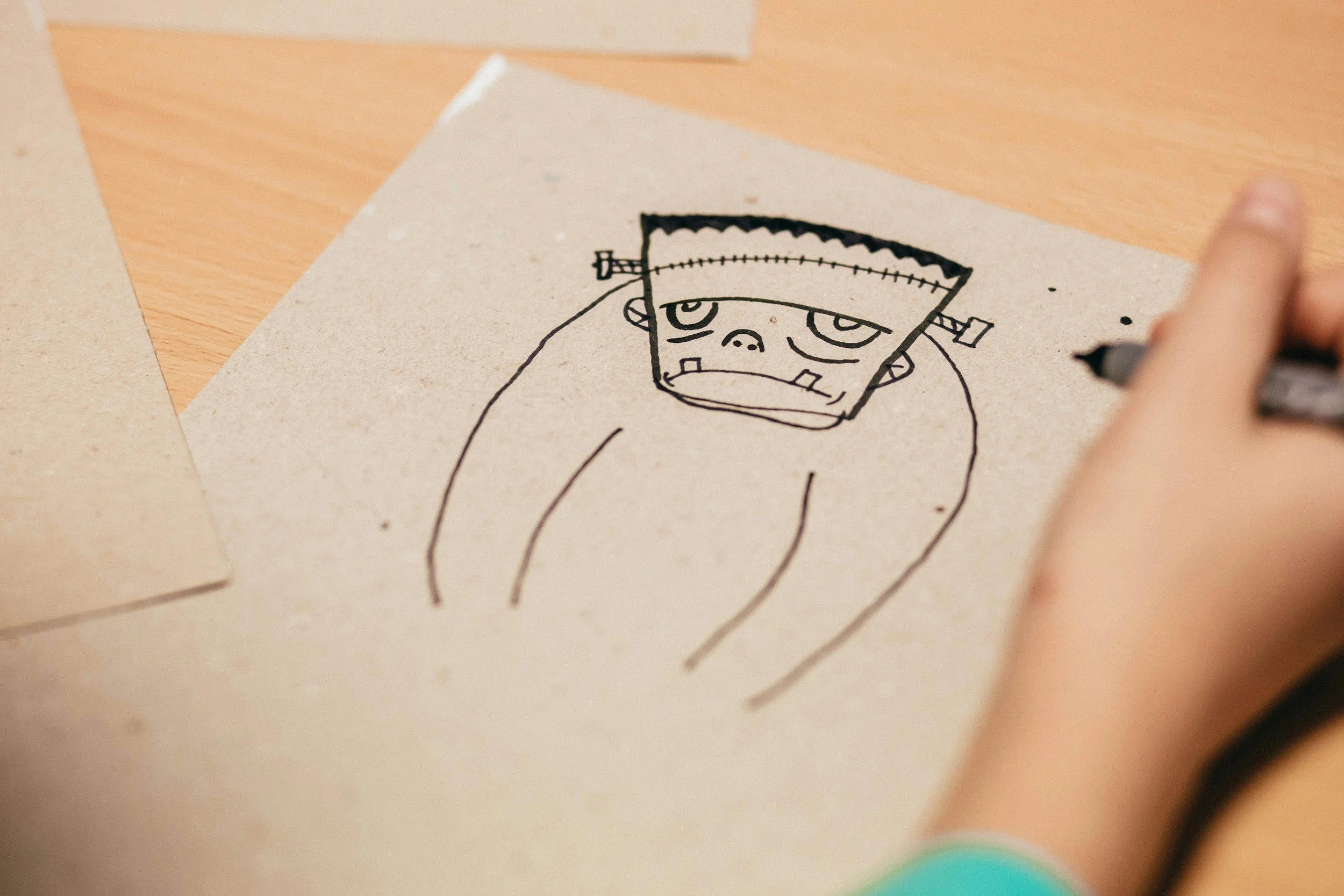
Sometimes, I picture these traits like Frankenstein’s monster;
At first, Victor Frankenstein admired his work. But he abandoned the monster for its grotesque appearance. After being rejected by society, the intelligent, lonely creature sought revenge on his creator.
We shaped and sculpted our perfectionist monster. For a time, it served us well. But even though we realize the very thing that made us unique may have contributed to the collapse of our health, the monster remains. Instead of being the asset it once was, the perfectionist will continue to wreak havoc on our body and mind unless we contain it by showing it kindness and compassion.
If we don’t, what once was our “superpower” will become our downfall.
You are not weak for needing limits and you are not lazy for honouring them.
And you certainly are not failing just because your life no longer looks impressive from the outside.
It’s not about giving up. You know this — because we’re not the type of people who give up.
Becoming Type C is about redefining what achievement looks like when your health finally matters.
So are you a chronic achiever? (see the follow-up post for the questionnaire).
If you resonated with this, you likely already know the answer — but you’re not alone here.
A New Year’s “Revolution”
I recently wrote about how traditional New Year’s Resolutions can be harmful, particularly for individuals with perfectionist tendencies who are living with chronic illness or a disability.
One of the biggest shifts in Becoming Type C is learning to listen to your body — not after it collapses, but while it’s still whispering.
In 2024, I learned the hard way that chronic exhaustion and ignoring pain aren’t signs of dedication. They’re signs that something is asking to change.
So I spent all of 2025 trying to respond with change.
The truth is that we don’t ever need a fresh year — we just have to be willing to make new choices.
Rather than creating resolutions for 2026, I have decided that I need to let go.
So I invite you to participate in the following reflection:
What are you carrying that you’ve already proven doesn’t work?
What habits are causing you more harm than good? What emotional pain are you carrying? Are you holding onto blame, resentment, or regret?
If you’re doing the same thing year after year and nothing has changed, you’ve already proven to yourself that it’s not working. Do you want to feel the same self-inflicted pain for another year? Do you want to stay in the same place if it’s not a good place? If something drained you or even broke you last year, it will do the same this year. The familiar pain may feel safer than unfamiliar change, but letting go of what isn’t serving you is your choice.
When it comes to living with chronic illness, there are so many things that are beyond our control. And sure, maybe to some extent we’re “unlucky”. But continuing to carry forward the same things that haven’t worked before isn’t bad luck — that is a choice we’re making.
We may not be able to avoid physical pain, but participating in things that are soul-sucking, repeating the same arguments with yourself or others, and overbooking your schedule and just calling it ambition are all examples of things that aren’t serving you. Let’s leave the “bs” behind.
This year, we release what isn’t working.
Where are you confusing being “responsible” with being afraid?
Are you choosing security over fulfilment? Do you call burnout normal because everyone else seems to have it? Do you run from change or growth because of what could go wrong? Are you preserving yourself today for your future or are you protecting what’s familiar out of fear of the unknown?
Fear often disguises itself as logic. People will call it “being realistic” as a way to avoid the discomfort of change.
Fear disguised as logic that often affects our happiness, our health, and our wellbeing. And when we allow fear to force us into comfort, it can act as a cage without us even realizing it.
Are you willing to show up for yourself and stop allowing fear to shrink you and your life?
This year, we show up for ourselves.
What does your body keep asking for that you ignore?
In high achievers, burnout often shows up as physical signs before you feel any mental stress. In other words, our bodies keep score; they will always collect what we neglect.
What has your body been telling you that you keep pushing aside? Do you keep pushing through exhaustion? Do you think feeling anxious is just you being productive? Are you skipping self-care or needing rest but feeling guilty for allowing that rest?
This year, we listen to our body’s whispers (before it starts screaming).
What are you justifying so people don’t judge or misunderstand you?
The right people don’t need convincing. Do you share more than what you want to share just to avoid assumptions? Do you try to soften your truth in hopes it will land better? If you even have boundaries, do you try to justify them? Do you respond to opinions you didn’t ask for in the first place?
Your energy matters far more than someone else’s expectations.
You don’t owe anyone (not even yourself) a perfectly packaged version of yourself.
People’s opinions are imagined realities that should never shape our lives.
Who is your life actually for? Is the way you show up every day just for others? How often do you feel the need to explain yourself and defend your decisions?
If you’re living for everyone else’s approval, you’re no longer the owner of your life — someone else owns it and you’re just renting it.
Your path in life doesn’t need to make sense to others.
Your life isn’t a group project — the only person you need permission from is you.
This year, freedom starts and explanations end.
What version of yourself are you afraid to disappoint?
If you could give your younger self a hug and could only tell them one thing, what would it be?
Old identities of ourselves carry so much emotional weight into adulthood. Often, we would never speak to a child the way we speak to ourselves.
Growth can sometimes feel like a betrayal of our past self or like we’re letting someone down, but you don’t owe permanence to any old versions of you or to any expectations. Clinging to an old version that no longer fits or works, or worrying about disappointing family or coworkers is just performance.
Outgrowing people and old versions of yourself doesn’t make you selfish; it makes you honest.
You’re allowed to outgrow the expectations that were set onto you by others.
This year, we let go of expectations.
If your health mattered most, what decision would you make?
You will never regret putting your health first. Sacrificing yourself is never the answer and living with chronic stress will steal everything from you.
Everything, aside from our health and our bodies, is replaceable.
Reduce your workload, even if it scares you.
Say “yes” to the 20% of your day that you prioritize and let go of the 80% that you don’t.
Prioritize rest and recovery over hustle.
Say no to environments and people who create stress. Living in survival mode is the fastest way to destroy your health and shorten your life.
Wellness should be treated as the foundation, never the bonus.
This year, we choose wellness.
What part of your life deserves privacy over performance?
Visibility is not the same as fulfilment. Not everything needs validation. Not everything needs to be shared with the world and, sometimes, privacy can be powerful.
Quiet seasons are essential for growth. Sometimes, we can be our most “productive” when we disappear for a while. This is rest we can take without the need to explain it to others.
And things often grow best when they’re nurtured and protected.
This year, we choose nurturing over momentum.
Who do you become if you stop negotiating your truth?
If something is calling, it will continue calling until we answer.
Do you need to end something that no longer aligns? Have you delayed stepping into a version of clarity for too long?
Negotiating with yourself adds so much internal conflict. And being able to find yourself is the greatest joy in life.
Be honest with who you are, what your values are, and who you’re truly becoming — because the longer you negotiate with your true self, the more it will cost you.
This year, we listen to our true selves.
You will always know the truth, even if the answers aren’t loud. You can even whisper them to yourself. And you don’t need permission, you don’t need certainty — you just need one honest choice at a time.
Becoming this version of yourself isn’t dramatic — it is intentional.
And if you’re truly honest with yourself, you’ll find all the answers.
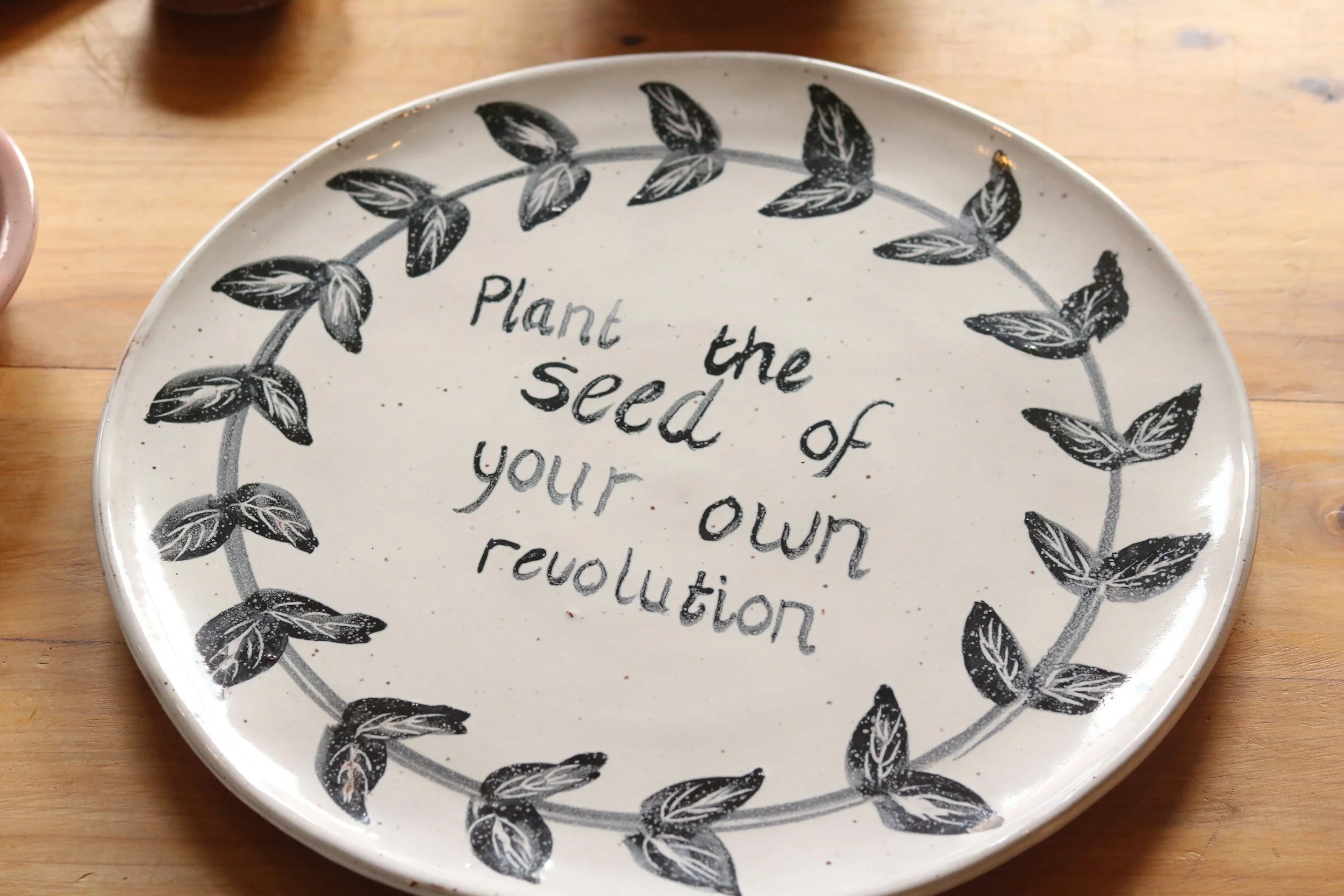
Maybe opposing the New Year’s resolution isn’t a revolutionary concept;
But it’s the first time I’ve considered removing something instead of adding more goals to my plate — and that’s revolutionary for me.
My revolution:
Your peace shouldn’t be the price you pay for ambition.
Your health should never be sacrificed for superficial success.
Your truth should not be ignored for validation by others.
The Things I Miss (And the Stories I Tell Myself)
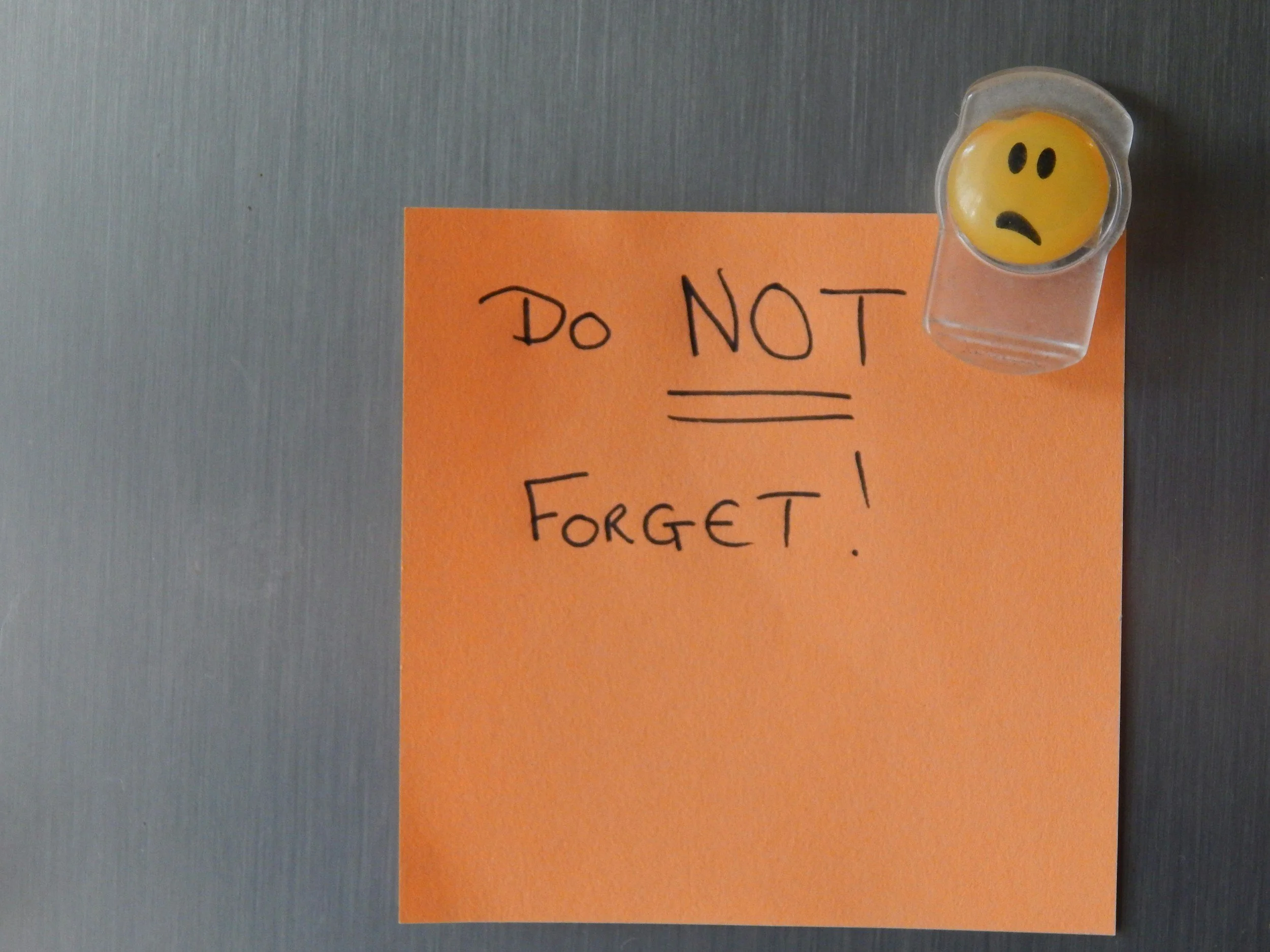
Yesterday, I missed two things that mattered to me: An appointment. And my dad’s birthday.
And even though my body may have had its own reasons, the story my mind tells has been much harsher:
It’s not like you had anything better to do. It’s not like you were busy. It’s not hard to check a calendar. Maybe you’re stupid. Maybe you’re selfish. You’re lazy. You're unreliable. You let people down. You should have tried harder. Maybe you should cancel your upcoming trip; you don’t deserve it.
You just can’t do anything right.
This is one of the cruelest parts of living with chronic illness — not just the things you miss, but the terror that comes with memory lapses and the way you blame yourself.
When all you want is to be capable, responsible, and reliable, but all you feel is guilt, fear, and regret.
This irony is that I was so busy trying to be productive in taking care of myself that I ended up neglecting things that mattered.
I took all my meds, I was focused on getting my daily steps in, I submitted some medical forms that were due, I did some light housecleaning, I was purposeful about avoiding screen time and social media, and I spent the evening writing a blog post.
I wasn’t lazy; I was lost in a world of my own, trying my best to be the “perfect” patient.
And I actually went to bed feeling rather accomplished.
Little did I know, I’d be waking up today to the familiar aching feeling of failure.
I’m realizing that so much of this change isn’t about accepting new limitations — it’s about unlearning the old rules. The ones that say effort should always overcome reality. The ones that tell us we’re unworthy unless we show up perfectly.
Missing something hurts.
Missing something you care about hurts even more.
I didn’t miss them because I don’t care.
I have to keep telling myself it’s not a moral failure.
One of these days, I may start to believe it.
I can feel sad that I forgot.
I can wish yesterday had gone differently.
I can even feel angry about it.
But the battle is in fighting the urge to turn pain into punishment.
It’s in fighting the voice that says, “if you can’t do this right, why bother trying”.
It’s in truly believing I’m doing the best that I can.
And in showing up for myself again tomorrow, despite how I feel today.
I am still learning — slowly and imperfectly — that caring about people can mean surviving today so we can still be here for the next one.
While my inner critic is saying I’m careless — I have to remember I’m human.

The Harm in New Year’s Resolutions
Each New Year arrives with a familiar pressure: Be better. Be stronger. Be disciplined. Be more. Be less.
Fix yourself.
For a lot of us high achievers, this language feels normal and potentially motivating. Exciting, even. But when you live with chronic illness, it can become something else entirely.
Is it possible that New Year’s resolutions are actually harmful to us?
Resolutions often assume something that no longer applies to our lives — that our bodies are predictable, that our energy is endless, that we all have the same 24 hours in a day, that lack of willpower is the only thing standing in our way, and that effort is always rewarded. They are built on the idea that if we just plan ahead and push harder, we can finally become the version of ourselves we keep imagining — the version we’re “supposed” to be.
It’s also what so many of us have been trying to do our entire lives, or for as long as we can remember.
And the truth is that it’s part of what broke us.
I know this because it played a role in breaking me.
Most individuals living with chronic illness aren’t stuck because they’re lazy or unmotivated. In fact, we’re usually the opposite. They’re stuck because fear wears a very convincing disguise. It calls itself responsibility. It calls itself realism. It says, “We’ve been doing it this way for so long that it’s just how life is now”.
Becoming Type C means that the fear of changing something no longer fits. It isn’t about becoming “a new you” in January; it’s about letting go of the old one. It’s about stopping the reruns that aren’t serving you. It’s about noticing which patterns, expectations, ways of thinking, and ways of living drained us last year (and all the years prior) — and choosing not to carry them forward just because they’re familiar.
It’s about realizing that you may have been a prisoner to the way you’ve been living — and deciding to pardon yourself today. And instead of waiting until you feel ready, you could take one tiny step now — imperfect, unpolished, but real.
You don’t need to become a master of anything before you’re allowed to live. You don’t need to earn rest or fulfilment by reaching some future version of you. Growth doesn’t come from perfection. Growth happens because we’re imperfect and it happens when we are willing.
Here, we encourage learning as you go. It means letting yourself change without needing to justify it. It means choosing health, clarity, and self-trust over the familiar chaos of pushing through.
What if this year, we focus on honesty?
Instead of asking, What should I accomplish?
We ask, What no longer works?
Instead of, What will this earn me?
We ask, Does this serve me?
Instead of, How do I fix myself?
We ask, What do I actually need?
Listening instead of forcing.
Resting instead of proving.
Living instead of waiting.
New Year’s resolutions always seem to focus on control.
Maybe the best and bravest resolution is in letting go.
The Duality of Our Reality
As a nurse, I am honoured to listen to others in their most vulnerable moments. My patients have taught be that each person is different and emotions vary widely. While it’s impossible to predict how we will feel in any given situation before we experience it for ourselves, what I know for certain is that there’s no right or wrong way to feel about something. What I’ve also learned is that more than one thing can be true at the same time—especially when it involves the human experience.
We are taught that emotions should be neat, consistent, and simple to identify. That if we’re grateful, there should be no room for sadness. If we’re coping, we shouldn’t be angry. If we’re moving forward, we shouldn’t still be grieving.
But real life doesn’t work that way.
I’m learning that I can miss the person I used to be and still feel peaceful in who I’m becoming. I can be heartbroken by what I’ve lost and grateful for the slower life that I have. I can be hopeful and still have days when everything feels exceptionally heavy.
In general, I’m someone who tends to look for the light. But it’s not possible to be optimistic all the time. I still have days when I feel sad. Days when I feel too tired to be strong. Days when I feel bad for myself. And that doesn’t mean I’m ungrateful. It doesn’t mean I’m failing at acceptance. It just means I’m human.
We are complex and life is complicated. And you are allowed to feel every emotion as they come and as they are.
There’s another part of this duality that people don’t often talk about.
There’s also an unspoken expectation that if I’m unable to work, I shouldn’t be allowed to be happy. As if not being able to work means I should only feel loss and suffer in silence. As if moments of peace or joy somehow make my illness less real.
I already feel like a prisoner in my own body. Sometimes, I’m even a prisoner of my home. I don’t see how forbidding myself from participating in what life has to offer is helpful or fair.
I am devastated that I can’t work in the way that I used to. My profession gave me purpose and a sense of meaning. I didn’t choose this. I miss independence, momentum, being around people, and the feeling of being useful in the world. The grief is real and it lives with me daily.
But there are parts of this slower life that I have to enjoy.
I enjoy listening to my body instead of constantly overriding it.
I enjoy having time to care for my needs.
I enjoy having freedom to find who I am.
I enjoy having space to think, to reflect, to be present.
Finding meaning or moments of joy in this chapter does not mean that I want to stay here. I would choose health if I could. It simply means I’m allowing myself to find the good in a reality I didn’t want or choose. The purpose of this blog isn’t to romanticize illness, but to highlight the things that haven’t been robbed. Making peace with parts of this life doesn’t erase what I’ve lost. It just means that I don’t want to let illness define it.
To anyone who looks at people who are living with illness or a disability and thinks, “But they’re still smiling. They’re still traveling. They’re still happy — how sick could they really be?”:
Joy isn’t a measurement of health.
One good day isn’t proof that we’re healed.
A moment of laughter doesn’t erase limitation.
Being able to move doesn’t mean there’s no pain.
A lack of complaining doesn’t mean there’s no suffering.
And being unable to work doesn’t mean we can’t live.
So smile. Take the trip. Find a new hobby. Do whatever it takes to make this life worth living.
We find joy not because we are fine, but because we have to.
Allowing ourselves happiness doesn’t mean we’re pretending — it’s how we survive being sick.
The reality is:
We can grieve while we grow.
We can hurt while we heal.
We can miss what we had and still appreciate what remains.
We can be sick and still be happy.
These feelings don’t cancel each other out—they exist together.
And they just tell more of the story that is allowed to be true.

Learning to Live Slower (Without Choosing To)
For me, slowing down wasn’t a choice. I slowed down because my body made the decision for me. At first, I resisted. I attempted to negotiate with my health. Surely, if I got a handle on my life by sleeping better and exercising more, I could fix this. Maybe, if just I tried harder and pushed myself more, things would return to normal.
I can assure you that if my strategy had worked and things had returned to normal, I wouldn’t be writing this blog.
Chronic illness begs that I accept limits I didn’t want and slow down timelines I didn’t plan. It has meant realizing that taking care of myself can no longer be optional and something I do after everything else is done. These days, taking care of myself is the work—and it’s the hardest thing I’ve ever done because it goes against everything I was taught. It also goes against every one of my instincts as a nurse, a woman, and a perfectionist. Somehow, I would have to learn how to turn off (or, at least, turn down) my default setting.
These days, my full-time job consists of allocating my very limited energy stores towards managing symptoms, scheduling medical appointments, attending medical appointments, driving to and from appointments, ordering medications, picking up medications, taking medications, resting, recovering, and maintaining some form of basic personal hygiene. Day after day, rinse and repeat. And don’t forget the recurring symptom flares thrown in to remind you to not get too comfortable. That leaves what little energy I may have left to move my body, keep up with chores and managing a household, caring for my pets, keeping human relationships, and participating in the occasional low-energy hobby. It’s like a cruel remake of “Groundhog Day”, where the only thing that really changes is how shitty you feel today.
I would be lying if I said there isn’t grief in this realization.
Grief for the version of myself who could move faster, do more, and say yes without paying a price. There’s also grief for the future I expected to unfold. No one really prepares you for the kind of grief that occurs from a million tiny losses collected over time.
Initially, slowing down felt like a personal failure. I was terrified of falling behind and I feared becoming small if I success was no longer my purpose.
But something surprising happened when I stopped fighting the slower pace that my body was desperately screaming for.
I had more time to think. I had more time to notice how I actually felt instead of how I thought I should feel. All of a sudden, I had the time to reflect on what mattered—and what didn’t.
Without the pressure to perform, I began to see how much of my identity had been built around productivity and approval. This was also when I realized that I had no idea who I was because I was so focused on what (not even who) I believed I should be. I realized that the life I was furiously clawing at was just a shiny image of external validation resting on a broken foundation.
Slowly but uncomfortably, I am trying to let that go.
Today, my life is smaller in most ways. It may also be quieter and clearer at times. But in every way, my life is more honest.
I’m learning that joy doesn’t have to be loud to be real, tiny wins can be celebrated, and big wins can be celebrated quietly. Achievements don’t have to impress for them to count. Progress shows up in simple routines, in rest that restores, and in the moments I used to run past and miss. I can say with complete honesty that the biggest achievements come in moments of not trying to prove anything—and in those moments, I’m beginning to actually like who I am for the first time in my life.
For me, becoming type C is about grieving a life I had, letting go of what I thought I wanted, and learning to accept what I was given—while also discovering that this new life might hold exactly what I didn’t know I needed.
What Is Type C?
If you grew up in the 90s like I did, you may remember the obsession many of us had with teen magazines. I remember skipping over all of the fashion articles and the posters of celebrities in search of my favourite section: the personality quizzes.
I’ve always been fascinated with sociology and what makes a person who they are. Of course, the quizzes published in the magazines weren’t to be taken seriously, but I’ve always been interested in what makes us all different.
Some of the most well-known personality types are what we call “Type A” and “Type B”. During my research, I found that these are less about personality traits, but rather how we relate to time, success, self-worth, and our environment.
Type A
The Type A personality will typically show a behaviour pattern of high drive, competitiveness, urgency and (you guessed it)—high achievement. People with this personality type tend to feel a strong desire to achieve and progress, they are often goal-oriented and self-disciplined, and feel a sense of time urgency. Interestingly, they have a tendency to associate self-worth with productivity and success, struggle to rest without guilt, and feel uncomfortable with stagnancy. Then there’s the tendency to push through stress, illness, and exhaustion. Although this personality may look like a cheat code to success, some of the hidden costs of being Type A include: chronic stress or burnout, anxiety around rest or slowing down, identity collapse during illness or loss, difficulty listening to bodily limits, and shame when productivity slows or halts completely. Check, check, check, check, and check. It is no surprise that Type A, “high-functioning” people become completely destabilized by chronic illness. When chronic illness says “effort does not equal outcome”, the Type A brain is screaming “if I only try harder, I’ll get better”.
When a Type A can no longer use achievement as a coping mechanism, they don’t just become tired and frustrated—they become completely lost and disoriented.
The true danger here is when the mismatch between a thinking pattern and a changed body is seen by the Type A as a personal failure.
Type B
Contrary to Type A, a person with a Type B personality has a tendency to be more relaxed and flexible. Although they can still be very driven, the difference is seen in what drives them; Type B is less driven by urgency and competition, and more driven by balance, enjoyment, and a sense of ease. Type B people tend to feel more comfortable moving at a slower pace, tolerate uncertainty more easily, find it easier to rest, and are capable of separating self-worth from productivity. They are, by no means, lazy, unmotivated, or unaccomplished, but simply don’t define themselves through success. The Type B may experience less stress, better work-life balance, and more enjoyment of the present. Within wellness culture, Type B is typically seen as the healthier and more desirable alternative to Type A.
And I so desperately wanted to be…well, Type B.
So, what is Type C?
I do want to briefly mention that there are actually additional personality types that exist: In this sense, Type C people tend to be analytical, logical, and stressed, whereas Type D people tend to be anxious, worried, and negative.
For the sake of this blog, my version of Type C (“C” for “chronic illness”) is something you become. It’s not something you’re born with or raised to be, but a way of living that emerges when the body sets limits that the mind didn’t plan for—through experiencing things like chronic illness, disability, burnout, grief, trauma, or long-term stress. In my experience, most Type C people used to be Type A’s—raised in achievement culture but unable to organize their lives around productivity, urgency, or control.
Instead, a Type C organizes their life around attunement—the practice of listening closely and responding accurately to yourself, your body, and the moment (the present). In simple terms, Type C attunement is the practice of responding to reality as it is—not as you wish it were. It’s not about giving up. Nor is it about being relaxed. It is about learning to live honestly and authentically inside your reality. Ultimately, Type C is shaped by bodily limits, unpredictability, forced slowness, and the dismantling of achievement as identity.
In practice, a Type C stops before exhaustion (not after), chooses rest now instead of collapsing later, notices emotional depletion as true fatigue, sets boundaries without self-judgement, allows rest without self-guilt or shame, understands that effort doesn’t always match results, practices energy preservation, accepts inconsistency, adjusts accordingly, and exists in the present. Outwardly, this may look like “doing less” to some; however, it is a form of self-trust and skilled regulation—and it is essential to our survival and wellbeing.
The Type C paces instead of pushing. Listens to the body instead of overriding. Plans loosely and revises often. Values sustainability over intensity. To a Type C, success is found in preservation (not in productivity or production). They live where effort meets personal limits and they choose honesty over denial. It isn’t laziness, resignation, lack of ambition, failure, or a wellness aesthetic, but a person who cares deeply about meaning, contribution, and integrity. A true Type C no longer sacrifices the body or mind in order to prove their worthiness—and it is a process, not an endpoint.
The process of becoming Type C may involve: grieving your former self, facing fear about the future, experiencing shame in slowing down, unlearning achievement culture, and even a complete identity crisis. However, there is often relief in no longer performing to capacity.
Type C is not less, it’s just a different way of being. It’s more directional, it’s quieter, and it’s honest. It is the unmasked self—the self who lives in alignment with your values, the self who takes care of you because you’re worthy of wellness, and the self who deeply matters to you—not because of what you achieve or produce, but just because you’re you and you’re here.
(And I am glad that you’re here).
Becoming Type C
I used to be so good at achieving. In fact, my entire life was built around it—“what’s next” was all I ever cared about.
Good grades. Clear goals. Big plans. A life built around constant momentum—what was next, what was bigger, what was better, and what comes after this. I knew how to strive and perform, and I believed I’d find fulfillment once I achieved the next thing—I was convinced that I’d find the ultimate happiness once I attained success.
Then my body stopped cooperating.
My chronic illness didn’t arrive as a single dramatic moment. Although I can pinpoint the exact moment in March 2020 when the illness began, it arrived quietly, then persistently, then completely. Fatigue deep in my bones that didn’t resolve with any amount sleep. Pain that didn’t make sense as an active person and at my age. A nervous system that suddenly refused to respond to willpower alone. The strategies that had always worked—discipline, grit, and the thought of the destination—stopped working.
At first, I just tried harder.
I treated my physical illness like it was a mental one. I treated the pain and fatigue like a temporary setback, something to outwork or out-think. I assumed I was clinically depressed because I was unable to keep up with life’s daily demands. I spent many days unable to get out of bed.
I had been here before. During my last year of nursing school, I was so burnt out from my full-time studies and working 3 jobs. I was also being bullied by my preceptor. I started taking Cipralex (an antidepressant) prescribed by a doctor at my university’s health clinic, which allowed me to push through until graduation. Once I graduated and quit two of the three jobs I was working, I was able to come off the meds.
“This must be depression”, I thought. So I started taking antidepressants and assumed I’d return to who I was before. Easy solution.
Unfortunately, the return never came. I still couldn’t get out of bed. In fact, the medications made me feel worse. I found myself becoming something else entirely.
I’ve since named it Type C. Not Type A, with its drive and urgency, and what I used to define myself as. Not Type B, relaxed and easygoing, and what I often wished I could be. But something quieter, slower, more fragile—and strangely more honest.
Type C lives in a body with limits. Type C plans loosely, rests often, and recalculates constantly. Type C feels apprehensive about tasks that others find simple, such managing to shower today. Type C measures competency in spoons (energy). Type C measures success in tasks completed today instead of goals achieved this year.
This shift is incredibly disorientating. Since my diagnoses, grief has been a constant companion—grief for the body I trusted and took for granted, the future I naively assumed, the version of myself who could do what I wanted without a myriad of consequences to follow.
We now live in a world where hustle culture is the new normal. Simplicity is seen as failure. Rise and grind is the expectation. If you’re content with your life, surely there’s something wrong with you. Working yourself to the bone is seen as a badge of honour. Busyness is used as a coping mechanism— if we’re too busy to feel emotional pain, we can simply ignore it. You’ll finally be happy when you achieve success and you can rest when you’re dead. And your value as a person is measured by what you produce—not by who you are.
There is shame in slowing down in a world that rewards speed and applauds self-sacrifice for greatness. There is fear in letting go of achievement when it once felt like the only proof that you matter. There is fear in stopping the performance. Listening to your body instead of constantly pushing feels wrong and unfamiliar. But, perhaps there is some relief to be found in learning that a smaller life is not necessarily an empty one.
This blog isn’t about inspiration, productivity hacks, or “finding the silver lining”. It’s about the messy middle: the identity shift—or crisis—that comes with a diagnosis. The reality is that we have no choice but to unlearn hustle culture as our default and go about the quiet work of building a life that fits the body you now have—because our lives simply depend on it.
I don’t have the answers, but I’m slowly learning to adjust. I am still grieving. I am still sad and I am still angry. I also feel deeply betrayed by my own body. And I’m trying desperately to learn how to live—and maybe even live well—inside this new constraint.
Here, reflection takes precedence over resolution.
I am becoming Type C in real time. If you are too—I invite you to stay awhile.